Nepal is located in South Asia between China in the north and India in the south, east and west. While the total land area is 147,181 sq. km including water area of the country that is 3,830 sq. km. The geographical coordinates are 28°00′N 84°00′E. Nepal falls in the temperate zone north of the Tropic of Cancer.Nepal’s ecological zones run east to west about 800 km along its Himalayan axis, 150 to 250 km north to south, and is vertically intersected by the river systems. The country can be divided into three main geographical regions: Himalayan region, mid hill region and Terai region. The highest point in the country is Mt. Everest (8,848 m) while the lowest point is in the Terai plains of Kechana Kalan in Jhapa (60 m).

The Constitution of Nepal, adopted in 2015, establishes Nepal as a federal secular parliamentary republic divided into seven provinces. Nepal was admitted to the United Nations in 1955, and friendship treaties were signed with India in 1950 and the People’s Republic of China in 1960. Nepal hosts the permanent secretariat of the South Asian Association for Regional Cooperation (SAARC), of which it is a founding member. Nepal is also a member of the Non Aligned Movement and the Bay of Bengal Initiative. The military of Nepal is the fifth largest in South Asia; it is notable for its Gurkha history, particularly during the world wars, and has been a significant contributor to United Nations peacekeeping operations.

Nepal Tourism Board:
Nepal Tourism Board is a national tourism organization of Nepal established in 1998 by an Act of Parliament in the form of partnership between the Government of Nepal and private sector tourism industry to develop and market Nepal as an attractive tourist destination. The Board provides platform for vision-drawn leadership for Nepal’s tourism sector by integrating Government commitment with the dynamism of private sector.NTB is promoting Nepal in the domestic and international market and is working toward positioning the image of the country.It also aims to regulate product development activities.

Fund for NTB is collected in the form of Tourist Service Fee from departing foreign passengers at the Tribhuvan International Airport, Kathmandu, thus keeping it financially independent. The Board chaired by the Secretary at the Ministry of Tourism and Civil Aviation consists of 11 Board Members with five Government representatives, five private sector representatives and the Chief Executive Officer.“Naturally Nepal, Once is not Enough” is the tourism brand of Nepal.”Naturally Nepal” is a simple expression that repackages the Nepal brand in a positive light. “Once is not Enough” not only accurately captures the tourists’ emotions at the airport’s departure gate but also serves as a decision tool that enables the Nepali tourism industry individually and collectively to focus both on consumer retention and acquisition.

Nepal Tourist Information Centers
Nepal Tourism Board, the tourist service center at Brikutimandap
(Phone: +97714256909, Fax: +977 1 4256910.
E-mail: info@ntb.org.np
provides brochures and free posters on Nepal from Monday to Thursday from 9 am to 5 pm. On Fridays, it closes at 3 pm. The department stays open until 4 pm in winter.

Other tourism information center locations are listed below with phone numbers.
Birgunj – 051-22083
Pokhara – 061-20028
Bhairawa – 071-20304
Janakpur – 041-20755
Kakarbhitta – 023-2020

Tourist Police Nepal:
Tourist Police Nepal was established in 1979 AD as a special unit of Nepal Police working under Ministry of Culture, Tourism and Civil Aviation, Tourism Industry Division. Tourist Police today has the strength of 227 Officers working under the Supervision of Police Inspector and has 24 units spread throughout the country including 9 units inside the Kathmandu valley and 15 units outside the valley in 11 different districts. The Central Office is situated inside the Premises of Nepal Tourism Board, Bhrikutimandap Kathmandu Nepal. Since its inception, the tourist police have been active in facilitating tourists and delivering security services.

For any assistance in Nepal:
Tourist Police Nepal
Bhrikutimandap Kathmandu. (Inside the premises of Nepal Tourism Board)
Phone: +977-14247041, 1144.
Email:- policetourist@nepalpolice.gov.np
Website:- www.nepalpolice.gov.np

No matter when and where you are Dial 1144

Resources: Nepal – Wikipedia, Nepal Tourism Board
What do you think is the ideal way of celebrating a wedding anniversary? Throwing a party, go out on a dinner date or a movie date, hang out with friends, a romantic candle light dinner, travel, take pictures and capture the moment, cut cakes and blow up balloons and what not!! These are the list of very few things that strikes our mind when we think of it. But for David Richardson and Jessica Richardson, planning their big anniversary day was not an easy task.

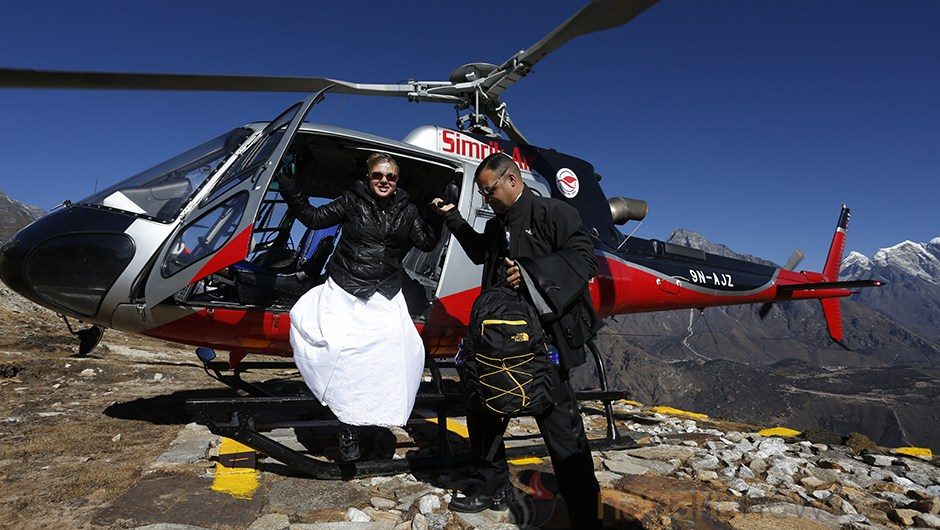
California based Richardson’s are currently working in Mauritious. They wanted their big day to be unique and adventurous. Rather than having a typical boring anniversary, they wanted to come up with something totally challenging and worth remembering in years to come. Eventually, they decided to celebrate their anniversary in Kala Patthar at 5664m and feel the cold breeze of Mount Everest. They also decided to make it up to all UNESCO listed heritage sites in Kathmandu Valley.

Though their anniversary was on September, Richardson’s decided to visit Nepal on November as it was the best season to visit Nepal. It was their fifth anniversary and Nepal trip was much anticipated. “Yes! What we dreamt has been materialized. Despite of the earthquake in April and the problems caused due to economic blockade, our dream came true and we didn’t find any difficulties celebrating our anniversary,” said Jessica after accomplishing their dream anniversary and having a photo shoot on their bridal wears at all the places. She added that the only dificulty she faced was fitting on the same bridal attire for five consecutive years. It was quite a challenge!

The couple said that they were highly overwhelmed by the warm hospitality of Nepalese people. They were inspired by the warmth of the people, the endurance and patience at gasoline lines, the way Nepalese people adapted to almost everything, their kind nature and then they were awestruck by the mountains. The couple further added that nothing can beat their 5th anniversary in Kathmandu. It was one hell of an experience and a lifetime achievement for them. It was the best anniversary celebration they have ever had. They had celebrated their first anniversary in Salsburg, second in Brussel, third in Rome,fourth in Mauritius and fifth in Nepal.

“We are even more happy after learning the fact that we have set a new  record of celebrating anniversary on Bridal attire at Kalapathar. It was indeed a proud moment”, says David and Jessica in a common voice. “We are returning back today with a message that Nepal is safe, secure, beautiful and welcoming as before despite of going through a hard time. Accurate global message needs to be spread to deliver correct message to people around the globe. Hey travellers ! Do visit this beautiful country now as there are less tourist in many mountains and you can enjoy a lot. If you want the madness to yourself, do pay a visit to Nepal.”, said David and Jessica.

Please check the Wedding Anniversary Tour.

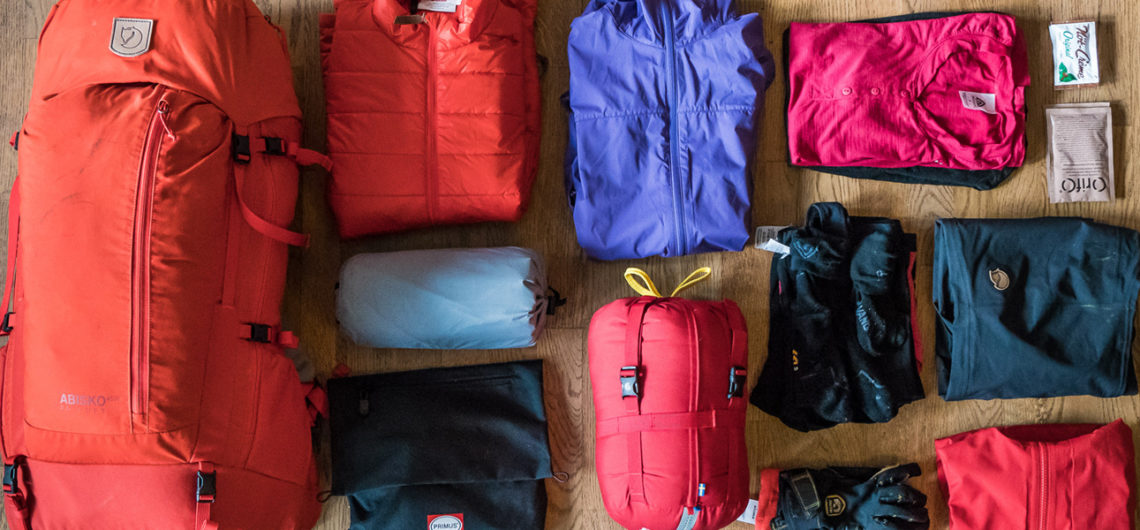
Are you planning to Nepal Trekking?. The Nepal trekking packing list below is based on our personal trekking experience in Nepal and has taken a long time to compile. As the list is so long and detailed, we recommend bookmarking this page as a future reference point. This packing list can be used for all hiking and trekking routes in Nepal, including the Annapurna Circuit, Everest Base Camp and the Langtang Trek.

On top of this, we regularly receive feedback from our readers and other experienced trekkers who provide brilliant and useful little insights into gear which we then add to the list.

Although the list can seem daunting and potentially heavy, many of the items listed below can be purchased or rented locally at Kathmandu, Lukla or Namche. Please note though that local equipment is sometimes not up to scratch for severely cold weather that you might encounter on the higher parts of your trek.

This Nepal trekking equipment list is comprised of gear that we have personally used or had recommended to us by experienced trekkers. We believe this gear provides the best value for money whilst also delivering the best performance.

Suggested clothing and equipment list for Nepal Tours:

Footwear:
Walking boots. A pair of water repellent boots with ankle support.
Gaiters. A pair used to keep boots dry if walking through deep snow.
Walking socks.
Trainers or trail shoes. Can be used in and around lodge in the afternoons/ evenings.

Clothing:
Waterproof jacket and trousers (goretex or similar).
Trekking trousers.
Long sleeve shirts (not cotton).
Micro fleece.
Mid to heavyweight fleece.
Sleeveless or body warmer type fleece.
Thermals or baselayer for top & bottom (merino wool or synthetic).
Fleece pants.
Medium weight down jacket (eg Nuptse jacket by The North Face).

Handwear:
Fleece gloves.
Warms mittens and/or gloves.

Headwear:
Wool or fleece hat.
Sun hat.
Bandana or scarf.
Headtorch.  Bring extra batteries.
Sunglasses.
Personal Equipment:
Sleeping bag (Note: it is possible to rent this in Kathmandu for about £1 per day).
Day pack large enough to carry water bottles, camera, lunch and extra clothing.
Stuff sacks for keeping your gear dry and organised.
Two water bottles (Nalgene wide mouth bottles are the best).
Sunscreen and lipsalve with a high SPF.
Water purification tablets (Pristine, Biox Acqua or Acqa Mira).
Favourite snack food.
Books, ipod and cards etc.
Trekking poles (Black Diamond with “Flick Lock” are best).
Camera with spare batteries and memory cards.
Insurance certificate.
Earplugs (optional).
Baby wipes (optional).
Hand sanitizer (optional).

Travelling:
Duffle bag or large backpack for your personal gear on the trek (carried by a porter).  Bring a small combination padlock to secure the bag.
Travel clothes. You will need casual clothing for air travel days and time spent in Kathmandu.
Toiletry bag include toilet paper, soap, towel, toothbrush, etc.

Personal first aid kit:

Note: we provide a comprehensive group first aid kit but please bring personal medications and other items you might use regularly such as:

Any personal medications.
Malaria prophylactic tablets.
Blister treatment (Compeed patches are the best).
Rehydration powder eg Dioralyte.
Analgesics (paracetamol, ibuprofen and aspirin).
Plasters and zinc oxide tape.
Throat lozenges.
Diamox (helps with acclimatisation