What do you think is the ideal way of celebrating a wedding anniversary? Throwing a party, go out on a dinner date or a movie date, hang out with friends, a romantic candle light dinner, travel, take pictures and capture the moment, cut cakes and blow up balloons and what not!! These are the list of very few things that strikes our mind when we think of it. But for David Richardson and Jessica Richardson, planning their big anniversary day was not an easy task.

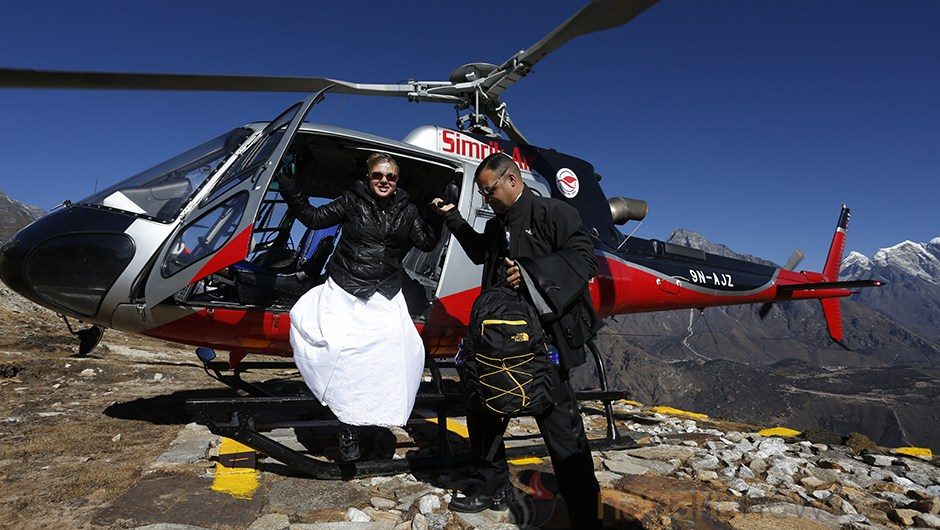
California based Richardson’s are currently working in Mauritious. They wanted their big day to be unique and adventurous. Rather than having a typical boring anniversary, they wanted to come up with something totally challenging and worth remembering in years to come. Eventually, they decided to celebrate their anniversary in Kala Patthar at 5664m and feel the cold breeze of Mount Everest. They also decided to make it up to all UNESCO listed heritage sites in Kathmandu Valley.

Though their anniversary was on September, Richardson’s decided to visit Nepal on November as it was the best season to visit Nepal. It was their fifth anniversary and Nepal trip was much anticipated. “Yes! What we dreamt has been materialized. Despite of the earthquake in April and the problems caused due to economic blockade, our dream came true and we didn’t find any difficulties celebrating our anniversary,” said Jessica after accomplishing their dream anniversary and having a photo shoot on their bridal wears at all the places. She added that the only dificulty she faced was fitting on the same bridal attire for five consecutive years. It was quite a challenge!

The couple said that they were highly overwhelmed by the warm hospitality of Nepalese people. They were inspired by the warmth of the people, the endurance and patience at gasoline lines, the way Nepalese people adapted to almost everything, their kind nature and then they were awestruck by the mountains. The couple further added that nothing can beat their 5th anniversary in Kathmandu. It was one hell of an experience and a lifetime achievement for them. It was the best anniversary celebration they have ever had. They had celebrated their first anniversary in Salsburg, second in Brussel, third in Rome,fourth in Mauritius and fifth in Nepal.

“We are even more happy after learning the fact that we have set a new  record of celebrating anniversary on Bridal attire at Kalapathar. It was indeed a proud moment”, says David and Jessica in a common voice. “We are returning back today with a message that Nepal is safe, secure, beautiful and welcoming as before despite of going through a hard time. Accurate global message needs to be spread to deliver correct message to people around the globe. Hey travellers ! Do visit this beautiful country now as there are less tourist in many mountains and you can enjoy a lot. If you want the madness to yourself, do pay a visit to Nepal.”, said David and Jessica.

Please check the Wedding Anniversary Tour.

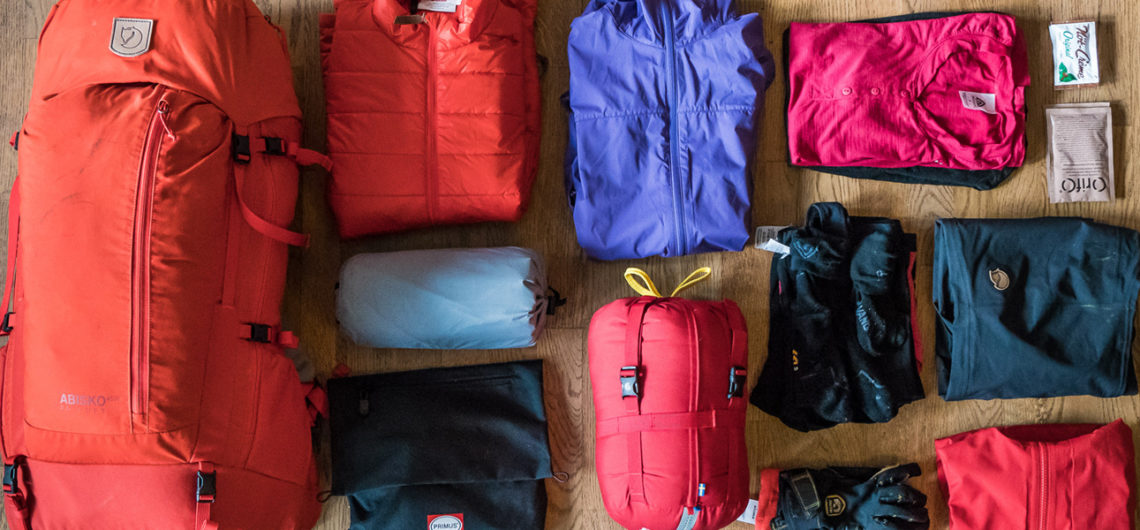
Are you planning to Nepal Trekking?. The Nepal trekking packing list below is based on our personal trekking experience in Nepal and has taken a long time to compile. As the list is so long and detailed, we recommend bookmarking this page as a future reference point. This packing list can be used for all hiking and trekking routes in Nepal, including the Annapurna Circuit, Everest Base Camp and the Langtang Trek.

On top of this, we regularly receive feedback from our readers and other experienced trekkers who provide brilliant and useful little insights into gear which we then add to the list.

Although the list can seem daunting and potentially heavy, many of the items listed below can be purchased or rented locally at Kathmandu, Lukla or Namche. Please note though that local equipment is sometimes not up to scratch for severely cold weather that you might encounter on the higher parts of your trek.

This Nepal trekking equipment list is comprised of gear that we have personally used or had recommended to us by experienced trekkers. We believe this gear provides the best value for money whilst also delivering the best performance.

Suggested clothing and equipment list for Nepal Tours:

Footwear:
Walking boots. A pair of water repellent boots with ankle support.
Gaiters. A pair used to keep boots dry if walking through deep snow.
Walking socks.
Trainers or trail shoes. Can be used in and around lodge in the afternoons/ evenings.

Clothing:
Waterproof jacket and trousers (goretex or similar).
Trekking trousers.
Long sleeve shirts (not cotton).
Micro fleece.
Mid to heavyweight fleece.
Sleeveless or body warmer type fleece.
Thermals or baselayer for top & bottom (merino wool or synthetic).
Fleece pants.
Medium weight down jacket (eg Nuptse jacket by The North Face).

Handwear:
Fleece gloves.
Warms mittens and/or gloves.

Headwear:
Wool or fleece hat.
Sun hat.
Bandana or scarf.
Headtorch.  Bring extra batteries.
Sunglasses.
Personal Equipment:
Sleeping bag (Note: it is possible to rent this in Kathmandu for about £1 per day).
Day pack large enough to carry water bottles, camera, lunch and extra clothing.
Stuff sacks for keeping your gear dry and organised.
Two water bottles (Nalgene wide mouth bottles are the best).
Sunscreen and lipsalve with a high SPF.
Water purification tablets (Pristine, Biox Acqua or Acqa Mira).
Favourite snack food.
Books, ipod and cards etc.
Trekking poles (Black Diamond with “Flick Lock” are best).
Camera with spare batteries and memory cards.
Insurance certificate.
Earplugs (optional).
Baby wipes (optional).
Hand sanitizer (optional).

Travelling:
Duffle bag or large backpack for your personal gear on the trek (carried by a porter).  Bring a small combination padlock to secure the bag.
Travel clothes. You will need casual clothing for air travel days and time spent in Kathmandu.
Toiletry bag include toilet paper, soap, towel, toothbrush, etc.

Personal first aid kit:

Note: we provide a comprehensive group first aid kit but please bring personal medications and other items you might use regularly such as:

Any personal medications.
Malaria prophylactic tablets.
Blister treatment (Compeed patches are the best).
Rehydration powder eg Dioralyte.
Analgesics (paracetamol, ibuprofen and aspirin).
Plasters and zinc oxide tape.
Throat lozenges.
Diamox (helps with acclimatisation

Nepal tourism experienced a dramatic turnaround last year after being hit by the twin disasters of a devastating earthquake and crippling trade embargo in 2015. Foreign tourist arrivals to Nepal jumped 39.71 percent to 753,002 in 2016, boosted by robust visitor growth from India, China, the US, the UK and Sri Lanka, according to the statistics of the Department of Immigration.

However, 2016 arrivals are still 4.69 percent down from 2014 when the country welcomed 790,118 foreign visitors. The tourism boom is expected to continue in 2017 and remains a major growth driver for the economy even as the industry sees low overseas promotional activities. October, November and December have been the most productive months for the industry, accounting for nearly one-third of total arrivals.

“It’s a dramatic growth. The industry is returning rapidly to its pre-earthquake growth level,” said Kedar Neupane, director general of the Department of Immigration. “The tourism boom is expected to continue in 2017 given a level of promotion by Nepal in the major source markets.” He said that if the government, Nepal Tourism Board and private sector conducted aggressive promotional activities, this year could be an extraordinary year. “We can expect 1 million tourists in 2017 considering the current environment.”

Neupane said that Nepal could see a boom in Chinese arrivals this year following the move by the Chinese government to encourage travel to the country. China has announced Nepal Tourism Promotion Year 2017 in a bid to encourage its citizens to visit the Himalayan republic, according to the Nepal Embassy in Beijing.

“The industry carried out massive marketing activities in major source markets after the earthquakes, leading to a massive recovery,” said tourism entrepreneur Basant Raj Mishra. “The arrival of foreign volunteers as well as conferences held by I/NGOs in Nepal last year propelled growth.”

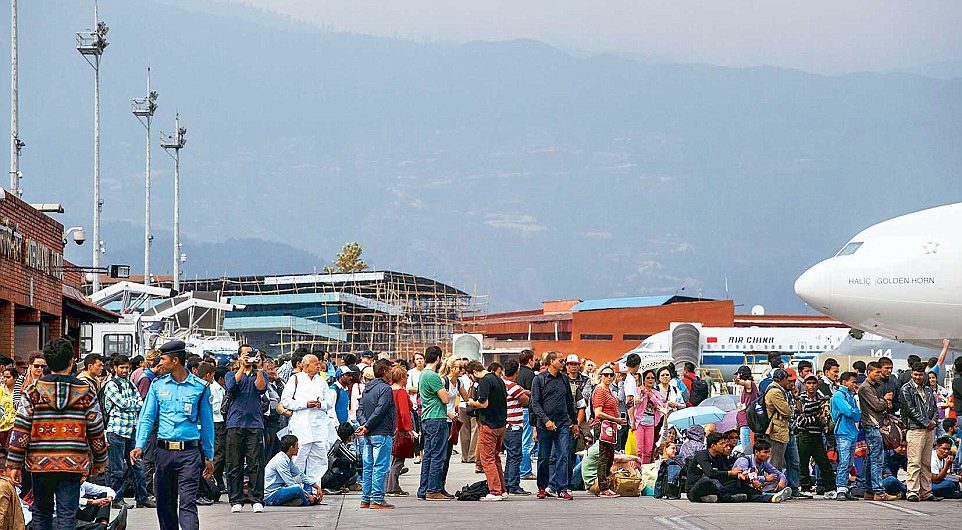
Suman Pandey, chairman of the Pacific Asia Travel Association (PATA) Nepal Chapter, said that 2017 looked promising; but the crumbling Tribhuvan International Airport (TIA), Nepal’s only international aerial gateway, could be a major setback.

“The hospitality industry in Nepal can accommodate more than 3 million tourists, but the airport is already choked with capacity constraints even though arrivals are way short of the one million mark,” he said.

TIA is currently served by 28 international carriers, and it has announced that it cannot accommodate more flights. “What does this statement mean? Of course, Nepal has become an attractive holiday destination for travellers, but TIA will remain the main obstacle to the growth of the industry.”

Nepal received a lot of media exposure following the earthquake which has aroused tremendous interest among potential travelers. The world’s leading travel guide Lonely Planet has named Nepal the world’s ‘best value destination’ for 2017. Likewise, Nepal’s Langtang region has been featured in The New York Times ‘52 places to go in 2017’ list.

Nepal has also appeared in the January travel issue of chinadaily.com.cn. “Nepal remains a fabulous choice for budget-conscious travelers, whether it’s the country’s world famous trekking routes or the wildlife in the southern region. Travel costs per day are as low as $50 on average,” it said.

A breakdown of arrivals by market shows Indian travellers at the top of the list. Arrivals from the southern neighbour reached 118,249 last year, up 57.40 percent. Chinese tourist arrivals jumped 55.26 percent to 104,005. Travel trade entrepreneurs said that Chinese arrivals did not increase as expected last year as the key entry point,

Tatopani Customs in Sindhupalchok, was closed after the earthquake. However, Rasuwagadhi has emerged as an important surface route with 23,452 Chinese visitors entering the country through this point last year.

Meanwhile, visitors from the US, Sri Lanka and the UK jumped 25.67 percent, 29.64 percent and 55.71 percent respectively.

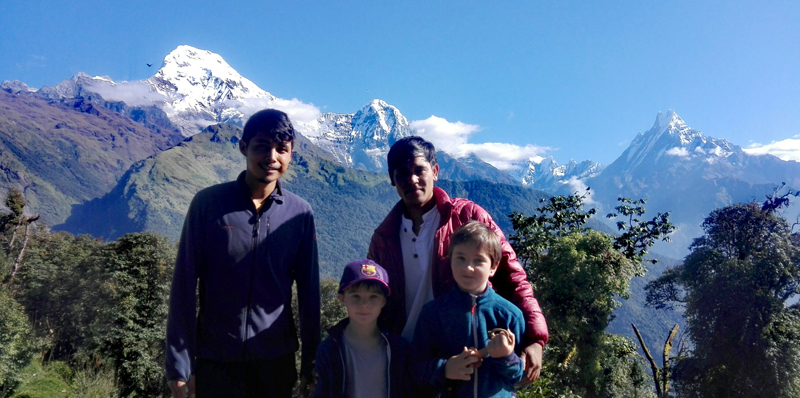
Nepal has been named on top ‘Best Value Destination’ and 5th on the top 10 countries in the world to visit in 2017, according to Lonely Planet’s annual best in Travel list released on Tuesday.

Nepal is the only destination in South Asia that has been featured in Lonely Planet’s Top Ten Destinations Guidebook.

The world’s leading travel guide Lonely Planet says, “Even natural disasters can’t keep Nepal down for long. The 2015 earthquakes caused devastation, but what is most striking from a traveller’s perspective is not how much was lost but how much remains.”

“Landmark temples crumbled, but others came through with just the odd tile out of place, and whole swathes of the country escaped serious damage, including most of the popular trekking trails.”

It added, “Nepal has all the skills required to repair monuments and infrastructure, but what it does need is income. By visiting Nepal now and supporting local culture and people, you could help a nation rebuild and bounce back even stronger.”

Among the top ten countries, Canada is number one followed by Colombia, Finland, Dominica, Bermuda, Mongolia Oman, Myanmar and Ethiopia.

On its selection process, Lonely Planet writes, “Amid fierce debate, the list is whittled down by our panel of travel experts to just 10 countries, 10 regions and 10 cities that travellers must visit in the year ahead. Each destination is chosen for its topicality, unique experiences and ‘wow’ factor. We don’t just report on the trends, we set them—helping you get there before the crowds do.”

As per the meeting held between Deepak Raj Joshi, CEO of Nepal Tourism Board and Lonely Planet Team in Delhi on October 24, both parties have agreed to work in  partnership by signing agreement in near future for promotion of Nepal’s tourism.

“It is a great honour for Nepal to get a place in such a prestigious guidebook. I do believe that it will give positive message to the international travel community and inspire them to visit Nepal in 2017,” said Joshi.

Over the past four decades, Lonely Planet has cultivated a dedicated traveller community. More than 130 million Lonely Planet books—to almost every destination on the planet—have now been printed in 14 different languages.